The Kitikmeot Region of Nunavut, Canada, has been inhabited for millennia by successive Indigenous cultures, beginning with Pre-Dorset peoples around 1800 BC, followed by Dorset (Tuniit) groups and, from roughly the 13th century AD, the Thule ancestors of today’s Inuit—particularly the Inuinnait (Copper Inuit) and Netsilingmiut—who developed highly adaptive seasonal cycles of seal hunting on sea ice in winter and caribou hunting and fishing on land in summer. European contact began with Samuel Hearne’s overland journey to the Coppermine River in 1771, intensified during 19th-century British naval searches for the Northwest Passage (including Franklin’s expeditions and Amundsen’s overwintering at Gjoa Haven), and expanded in the early 20th century with the fur trade, Hudson’s Bay Company posts, and the gradual establishment of Canadian colonial administration. Designated the Central Arctic region of the Northwest Territories in 1981 and renamed Kitikmeot (an Inuit term for the area) in 1982, with Cambridge Bay as its headquarters, the region became part of the new territory of Nunavut on 1 April 1999 following the Nunavut Land Claims Agreement.
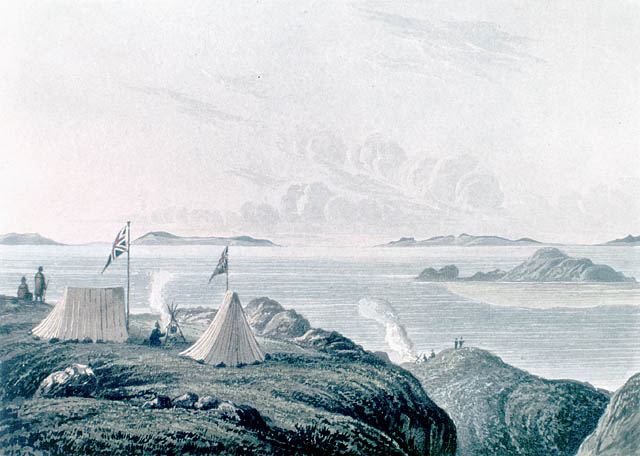
Tree River • Port Epworth
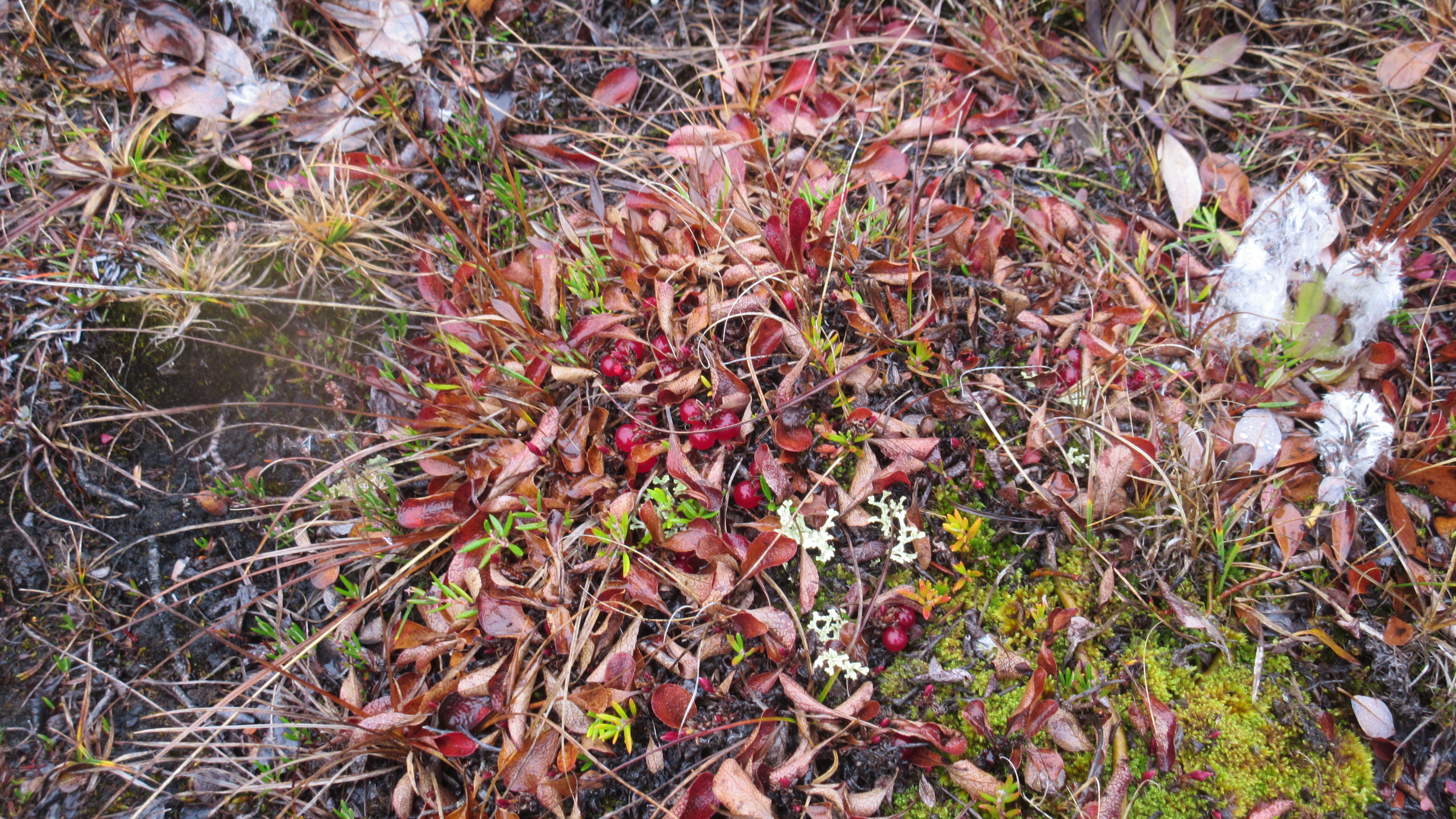
Our first stop was near the mouth of the Tree River, a place of abundant Arctic Char, Muskox, Caribou, Polar Bears, Arctic Hares, Muskrats, Cranberries, Blueberries, and Crowberries. This has been a popular hunting and fishing location for many generations of Inuit.
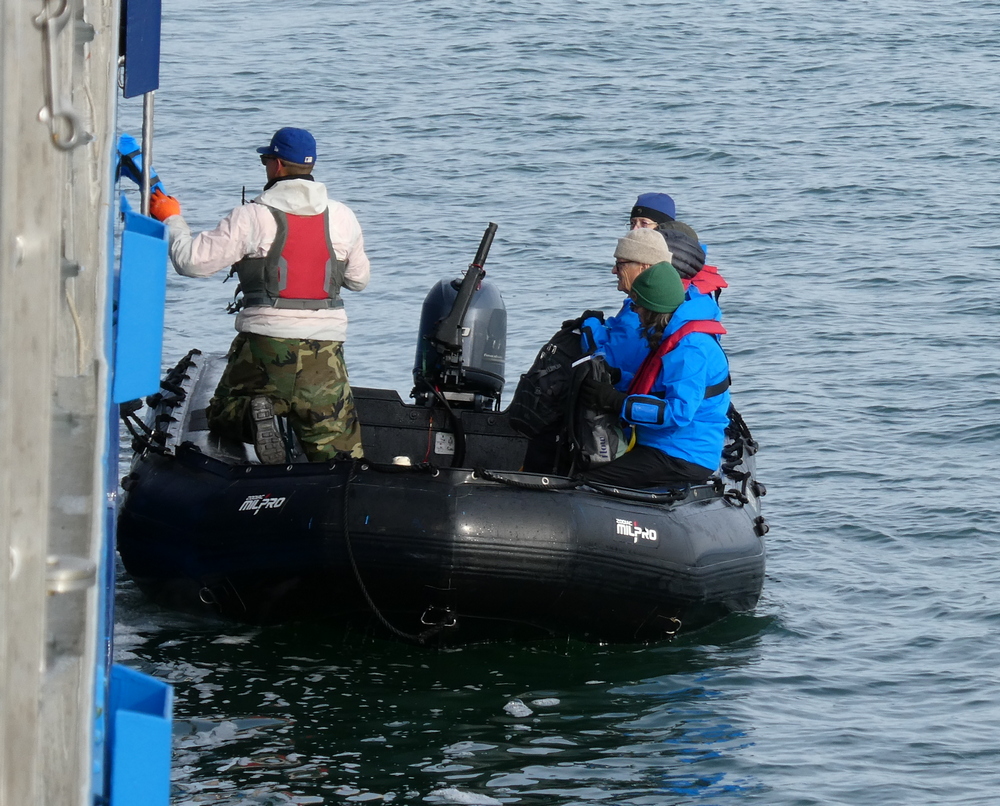
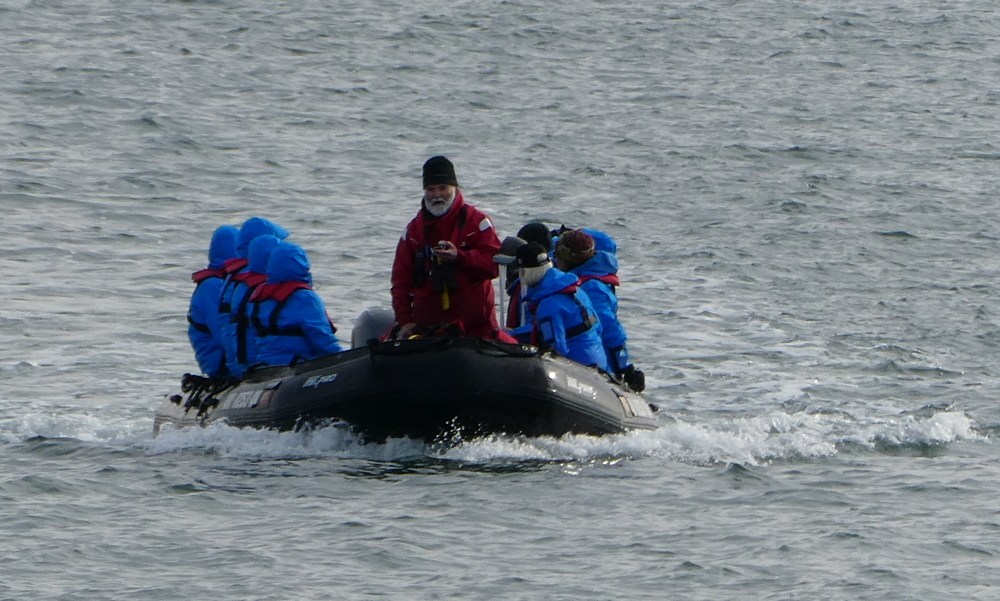
Our Zodiacs deposited us, only slightly wet, on the tundra shore, for a hike up the granite cliffs. The thick moss of the tundra cushioned our steps as we hiked through beautiful fields of willows and birch, most only inches tall. We discovered berries and beautiful tiny flowers along our walk, but you had to look closely as they were all pretty small.
This location is famous for its paleoproterozoic stromatolites that had our resident geologist, Marc St-Onge raving. These 1.9 to 2.3 billion year old, cinnamon bun shaped fossils, were made by colonial cyanobacteria (the oldest lifeform on earth) that settled to the bottom of the warm sea that covered this area. Cyanobacteria were the organisms that generated oxygen, changing the atmosphere from 1% oxygen to 20% oxygen.

A small graveyard marks the remains of RCMP Cpl. Doak, who was killed by Alikomiak in 1922. A story that shows the clash of Inuit and Canadian justice and the most famous trial in Arctic history.
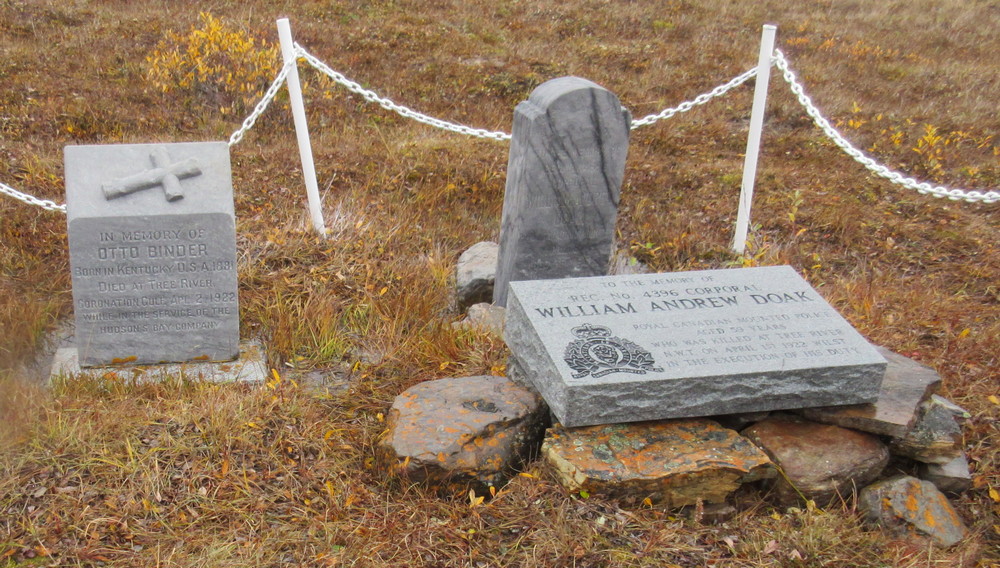
An Inuit named Pugnana killed 5 others in disputes over wife-stealing and other matters and stated that he was determined to kill more, even asking for help from his cousin, Tatamigana. The Inuit custom of qiquq or hujuujaq meant that the community had a duty to kill someone who presented a danger to to that community in order to protect everyone else.
Sanctioned by the elders, Tatamigana and Alikomiak, were tasked with carrying out this justice. When the RCMP heard of this killing, they considered it to be murder, and regardless of the reason for the killing, they were charged and arrested. The government's intention was to enforce Canadian law over Inuit justice. In the process of arresting Alikomiak, he killed the RCMP officer in "self defence".
Tatamigana and Alikomiak were taken 1200 km to Herschel Island in the Yukon, where they were tried by a jury of all white men. The trial for both only lasted one day. No witnesses were called for the defence. The judge, a hangman, and portable gallows had been brought from the south for the trial. On February 1, 1924, both men were hanged - the first Inuit tried and executed for murder under Canadian law. Read the full story with the trial transcripts in the book: Arctic Show Trial: The Trial of Alikomiak and Tatamigana.
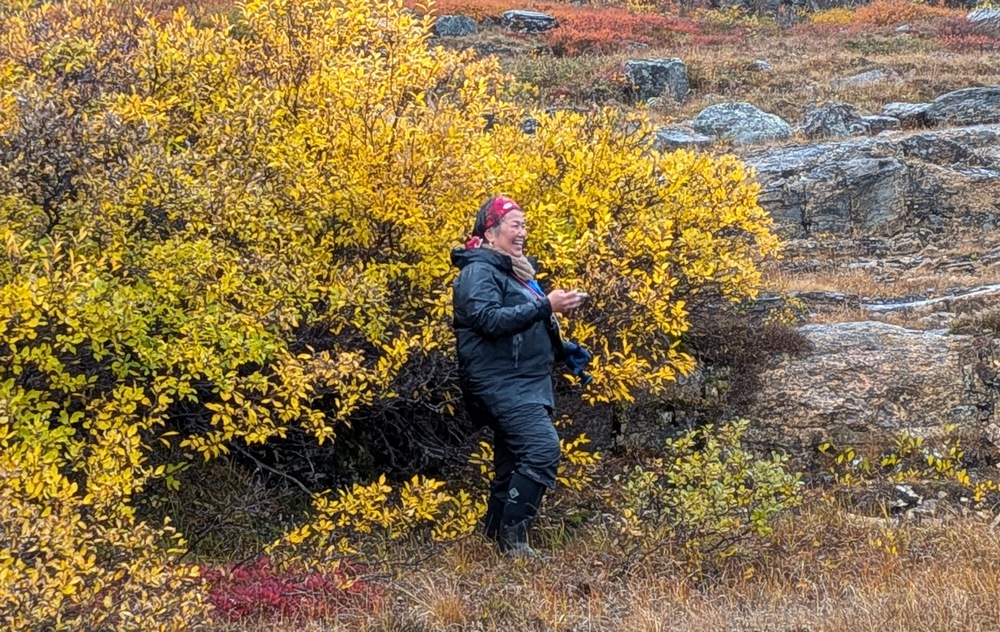
The story of Tatamigana and Alikomiak was told to us by our incredible guide, Aleqa Hammond. Aleqa was born in Narsaq and grew up in Uummannaq, Greenland. Raised to be the wife of a hunter, she was knowledgeable about all things in the Arctic. She pointed out the signs of the life on the tundra. Scat from muskox and caribou. Muskrat holes. And how the Inuit cached extra meat from their kills to be found by following groups, even years later. Permafrost makes a great freezer. We only later learned that she was the first female Prime Minister of Greenland, and later the Greenland representative in the Danish Parliament.
Magnetic North Pole
A highlight for me, this morning, was crossing the path of the magnetic North Pole. In school, I remember learning of its location in this Arctic archipelago. In 1918, in this very spot, our compass would point straight down. We are now north of the North Pole in all years before that. The route map shows the path the pole has taken over the past two centuries.
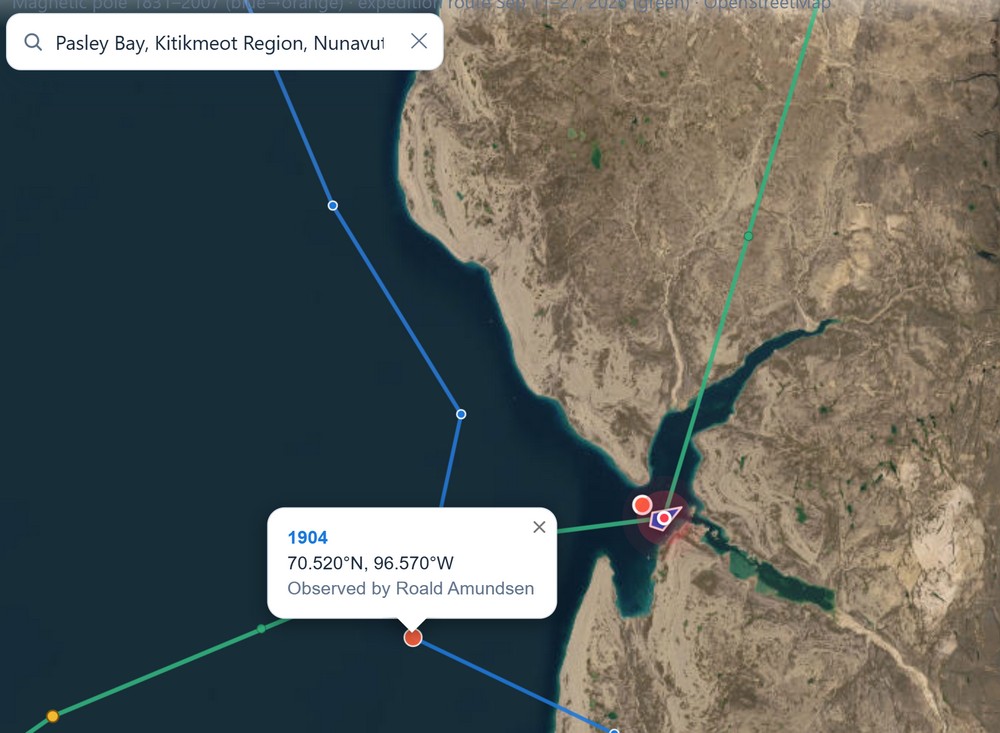
Pasley Bay
We are in a sheltered inlet surrounded by ice flattened low hills. The Thule culture migrated through this area about a thousand years ago. The Inuit here were essential to the survival of the later European explorers. In 1831, James Clark Ross, mapped the location of the North Magnetic Pole, just outside this bay.
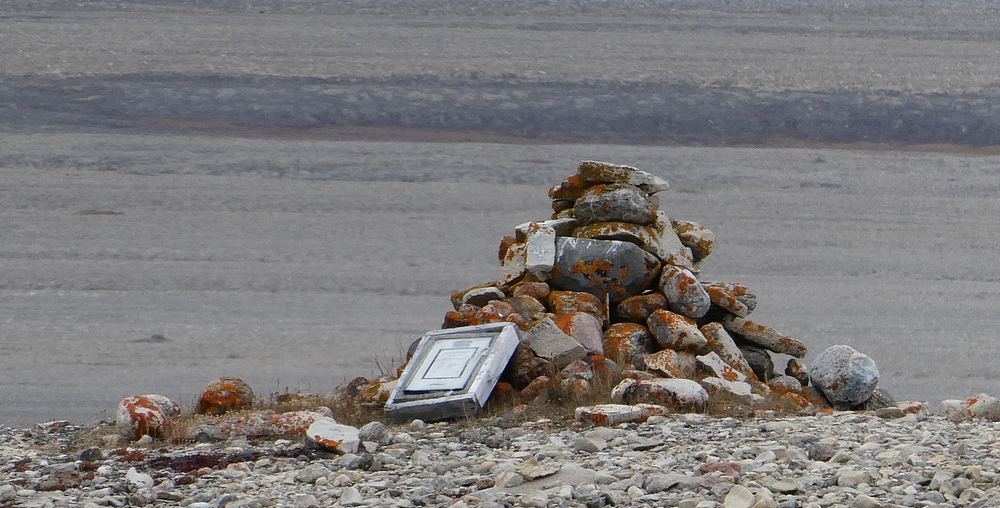
The RCMP schooner, St. Roch, wintered here in 1941 during its navigation of the Northwest Passage - the first west to east transit. This was a Canadian expedition to reinforce sovereignty over the Arctic region.
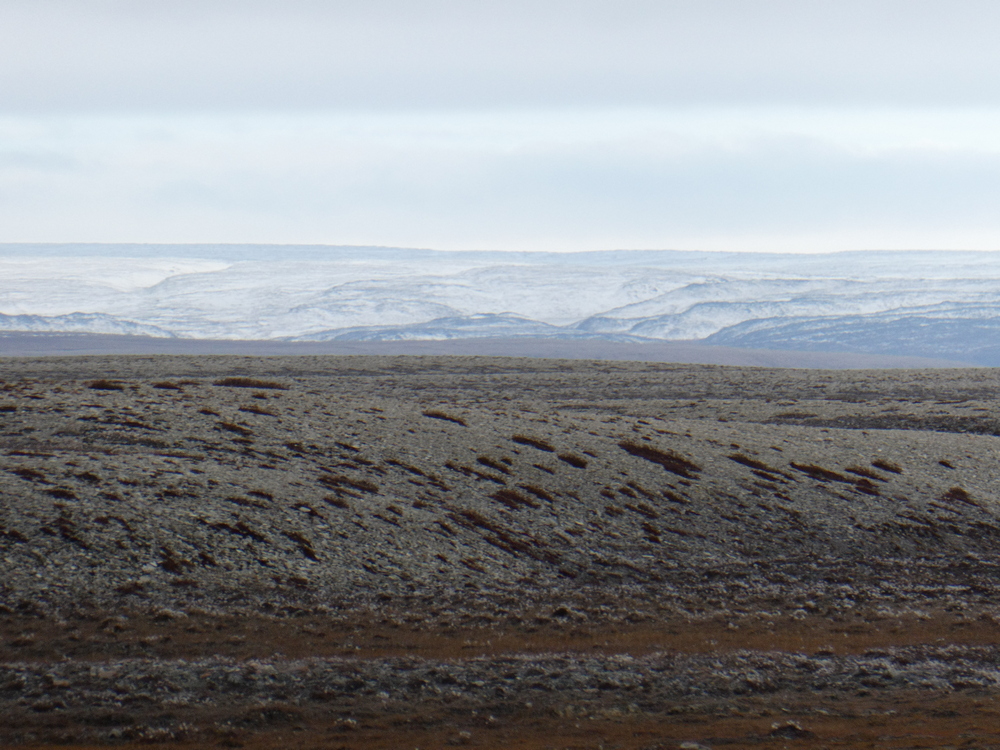
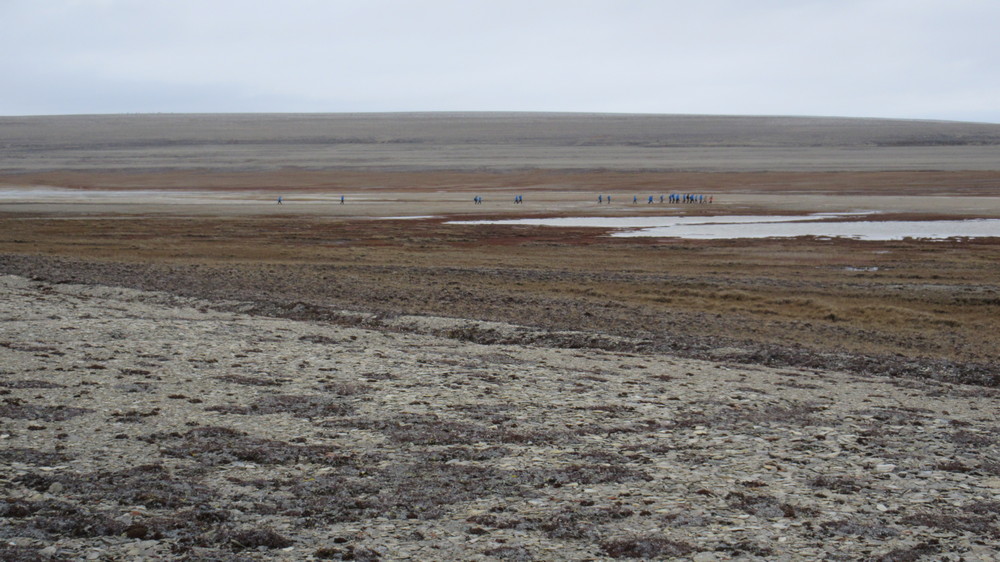
Landing on the beach after a rather wet Zodiac ride, the land feels empty. But, once again, here we find signs of life. A tent circle of stones that our archeologist tells us is probably 1,000 years old from the mid-Dorset migration. She can tell by the arrangement of the stones.
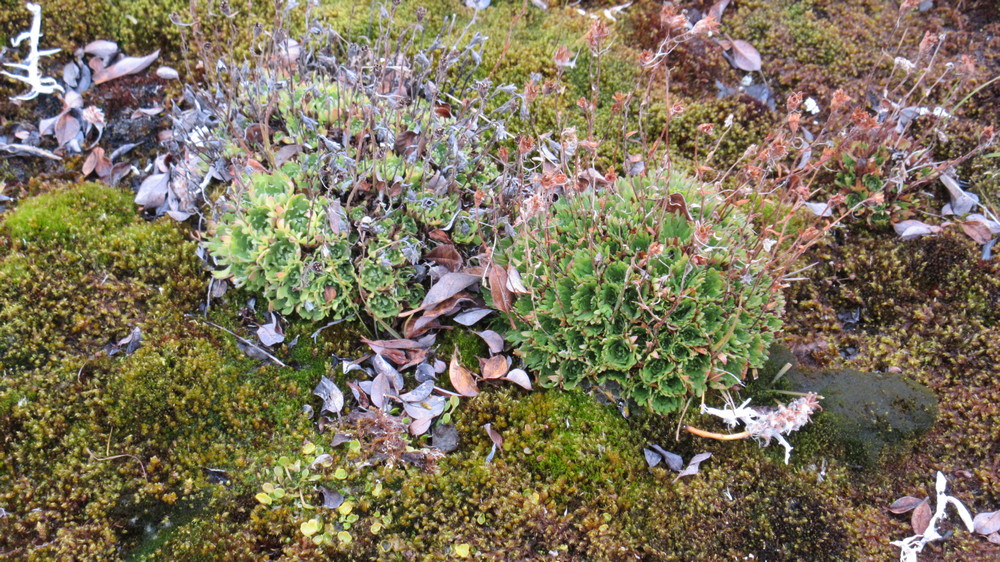
Scat tells us that Muskox have visited not long ago, along with caribou and geese. Clumps of vegetation around older scat reveals tiny willow trees with extensive root systems, prickly saxifrage, Arctic poppies, and many more tiny plants.