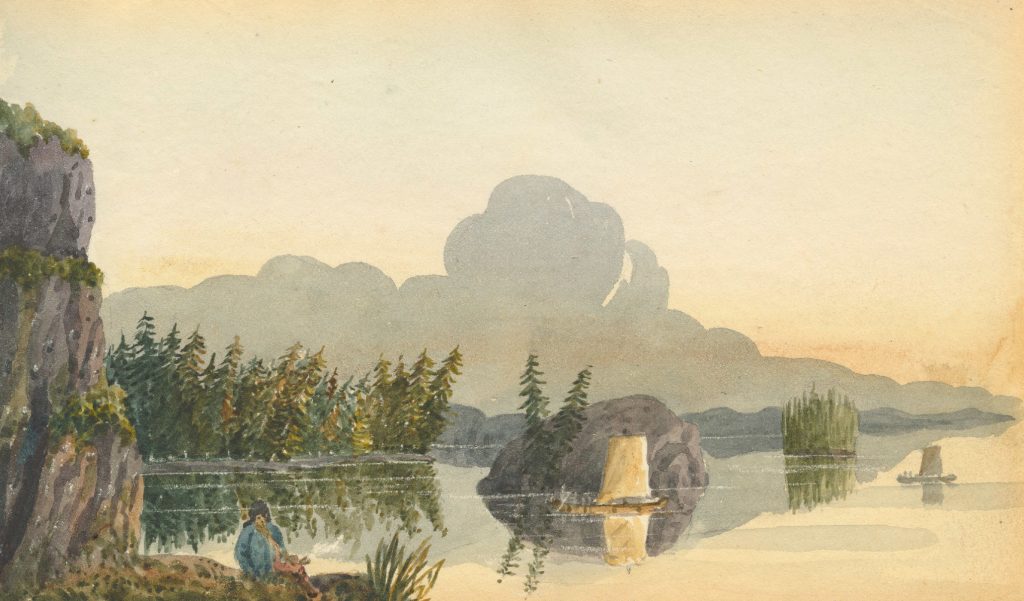
Kugluktuk lies at the mouth of the Coppermine River, which has a long history tied to European exploration. Named for the copper nuggets found along its banks, it was first reached by a European in 1771 when English explorer Samuel Hearne traveled down it to the Arctic Ocean. Hearne was apalled as he witnessed his Indigenous guides massacre a group of Inuit at a location he named Bloody Falls. A Journey to the Northern Ocean: The Adventures of Samuel Hearne. The river's next major historical chapter came with Sir John Franklin's first overland expedition (1819–1822). Charged with mapping the Arctic coast east of the river's mouth, Franklin's party descended the Coppermine in July 1821. Ignoring his guide's advice that it was too late in the season to start out, the journey proved disastrous. With canoes damaged and supplies exhausted, the return trek saw nine men starve to death, and possible caniballism. The survivors, including Franklin, were only saved by the timely intervention of Yellowknives Dene Chief Akaitcho, who provided food and guidance. Franklin's expedition is told in all its gory detail by Ken McGoogan in Dead Reckoning: The Untold Story of the Northwest Passage. In his own words, read Franklin's account in his 1823 bestseller: Narrative of a Journey to the Shores of the Polar Sea in the Years 1819-20-21-22
Instead of waiting for the school bus that would take us to town, we decided to walk in from the airport. Our route took us past the COOP grocery store.
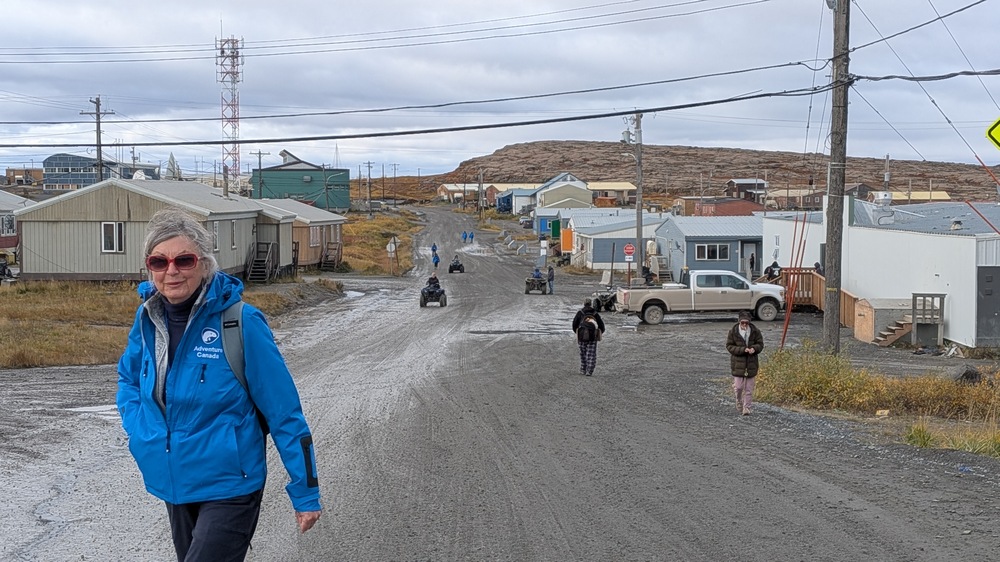
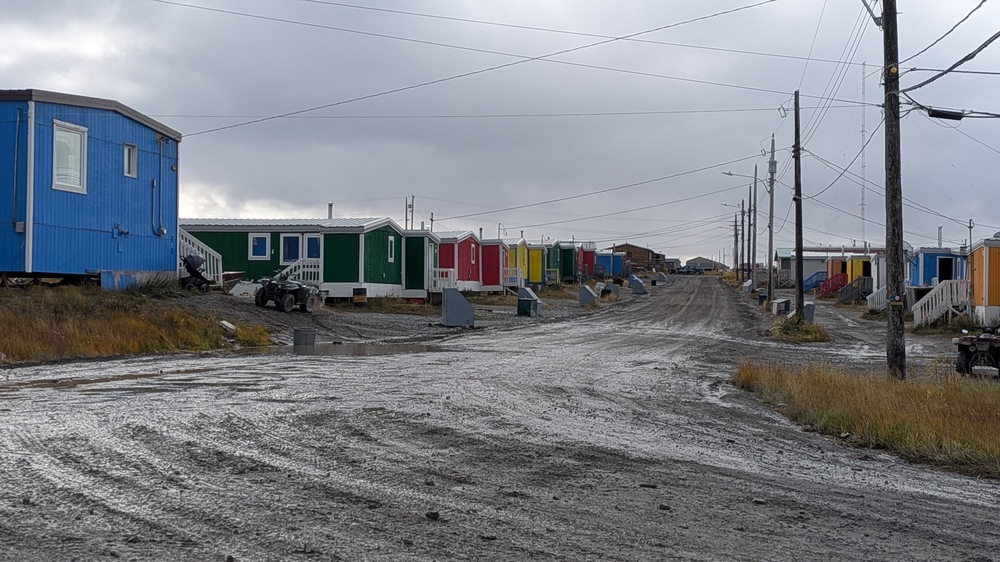
The streets are pretty muddy. The main method of transportation seems to be quad bikes that zip around at full speed.
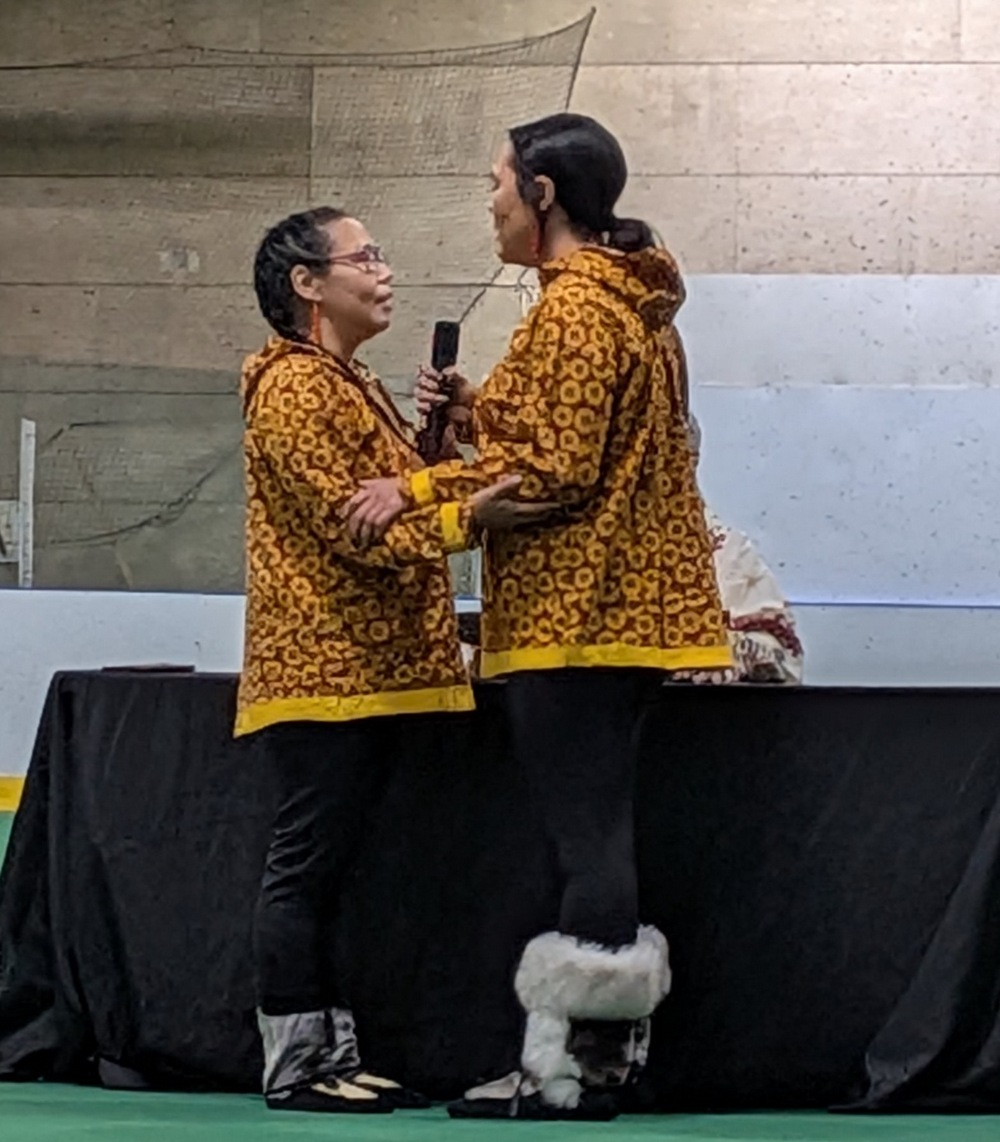
Unfortunately, due to some miscommunications regarding how many of us to expect, we arrived too late and all the Bison stew and foraged mushroom soup was gone. After some bannock and coffee, we were treated to a presentation of drum dancing and throat singing. Apparently throat singing is mainly practiced by young unmarried women, waiting for a man.
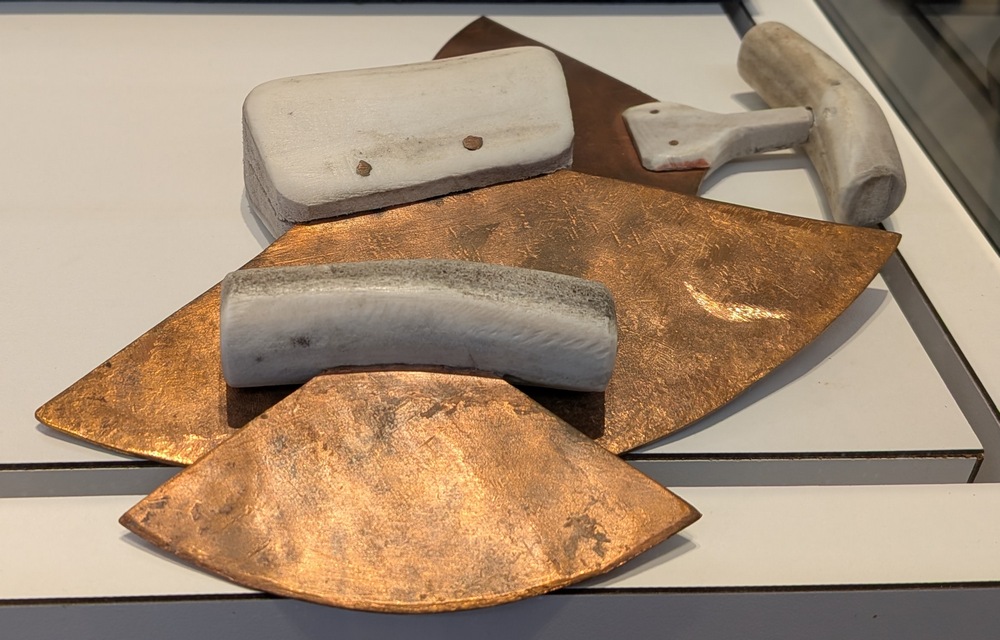
The nearby Heritage Museum was well worth a visit. Kugluktuk was known as Coppermine because the Innuit mined copper and used it for their knives and tools.